By 2050,
86% of Latin America’s population will live in cities, according to the
Inter-American Development Bank. The demand for housing in major cities is
forcing urban areas to grow vertically rather than expand outward due to
limited space. In fact, 89% of available housing in large cities in Chile,
Colombia, Peru, and Mexico is located in apartment towers, according to a
report published by El Economista.
This upward
growth has implications for emergency services, especially when time is
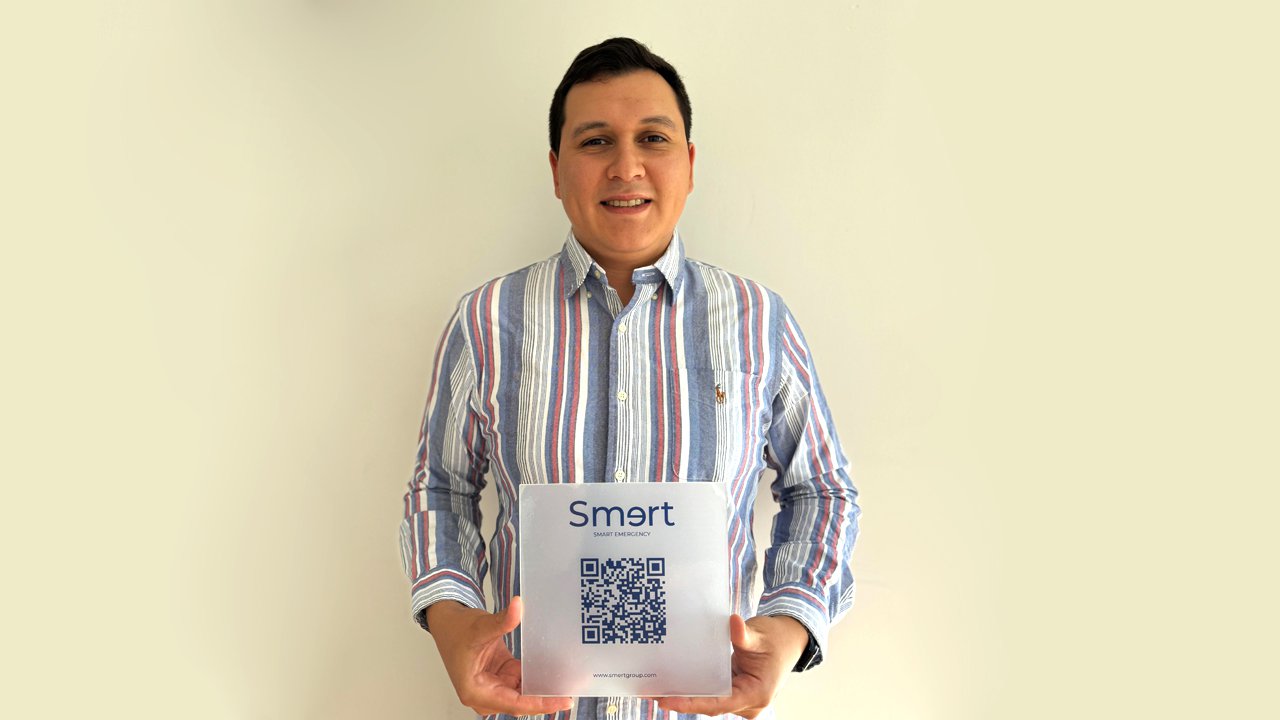
critical. Nicolás Uribe (Chile, 31 years old) has developed an intelligent
emergency system called Smert, which digitizes key information on fire
protection systems, emergency exits, and structural layouts.
This
Chilean entrepreneur explains that the ongoing vertical expansion of cities in
Latin America poses a major challenge for emergency response teams. Fires in
high-rise buildings are very different from those in single-family homes.
Apartment blocks have a much higher occupancy load, fire spreads vertically at
a rapid pace, and smoke can quickly engulf multiple floors—greatly complicating
evacuation efforts.
For this
reason, Uribe sees it as crucial that emergency teams have access to building
information within seconds of arrival, to efficiently manage the situation and
assist in rescue operations. As a volunteer firefighter with the Fourth Fire
Company of Concepción, he knows exactly which tools and data points can
facilitate evacuation during a fire.
All
relevant information is digitized and made accessible to emergency personnel by
simply scanning a QR code. This eliminates the need to track down someone with
access to blueprints or knowledge of emergency exits. Instead, everything can
be viewed instantly on a mobile device.
The system
is fully developed and has been validated both technically and commercially.
Currently, it operates as a subscription service for residential buildings and
commercial structures, but it is completely free for emergency services. Smert
also offers tailored solutions depending on building use. “We offer
Smert for apartment buildings, Smert Hotels for hotels and their guests, and
Smert Insurance Tools for insurance companies to assess structural risk. The
latter is currently undergoing technical validation with insurance brokers,”
explains Uribe, a Civil Engineer with a degree in Engineering Sciences from the
Universidad Católica de la Santísima Concepción (Chile), and holder of an MBA
from CEREM Business School (Spain) and a Master's in International Senior
Management from the Complutense University of Madrid (Spain).
Smert has
reduced the time needed by emergency teams to access building information from
15 minutes to just 15 seconds using the QR code, and has already been
technically validated in real emergencies, including gas leaks and fires.
Currently, over 3,000 firefighters have been trained on the platform, and more
than 30,000 people are protected by the technology, which is already deployed
in over 200 structures across Chile, Peru, and Spain.
Uribe’s
goal is to make cities safer and more sustainable, protecting lives and
ensuring that in emergencies, rescue operations happen swiftly, reducing
structural damage and minimizing material loss. This solution directly supports
Sustainable Development Goal (SDG) 11, focused on building sustainable cities
and communities. For their impact, the Smert team were named global champions
of the Babson Collaborative Student Challenge in 2019 (USA).
Uribe has
been recognized as one of Chile’s 100 Young Leaders by El Mercurio and the
Universidad Adolfo Ibáñez. He was also a finalist in the Fundación Mapfre
Social Innovation Awards, winner of the Startup of the Year Award from the
Universidad del Desarrollo (Chile), and currently mentors other startups. He
has been named one of the 35 Innovators Under 35 by MIT Technology Review in
Spanish.