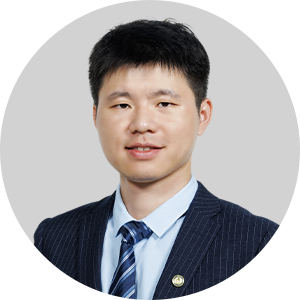
Fengbin Tu specializes in artificial intelligence (AI) chips, computing-in-memory (CIM), and reconfigurable computing. Through architectural innovations, he has pioneered new technological pathways for high-performance and energy-efficient intelligent computing systems. He proposed the reconfigurable CIM paradigm. By integrating reconfigurable computing logic within memory, this architecture effectively tackles the “von Neumann bottleneck” issue inherent in traditional computing architectures, significantly reducing the energy consumption and latency associated with data movement, while flexibly supporting various AI operators. The ReDCIM processor developed based on this architecture demonstrates outstanding energy efficiency when handling complex computational tasks, such as floating-point operations in high-performance scenarios.
To meet the needs of cutting-edge applications like autonomous driving and embodied intelligence, he collaborated with the team at the Hong Kong AI Chip Center for Emerging Smart Systems (ACCESS) to develop AC-Transformer, a reconfigurable AI processor supporting both convolutional neural networks (CNN) and Transformer models. This chip utilizes a memory-compute-aware co-optimization methodology, dynamically adjusting compute and memory resource compression strategies based on the characteristics of different computational phases within an AI model, achieving system-level energy efficiency optimization. This research was presented at the 2025 International Solid-State Circuits Conference (ISSCC), renowned as the “Chip Olympics." This marks the first AI chip paper from Hong Kong accepted at ISSCC. In 2025, he co-founded the AI chip company HarbourTek Limited to commercialize the team’s AI chip and CIM architecture technologies.
His work bridges cutting-edge chip architecture research with practical industry needs, continuously driving the development of AI computing technology.