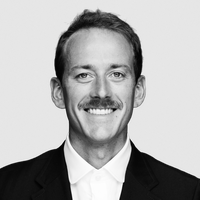
Photo of Aditya Grover

Energy & sustainability

Aditya Grover

He’s developing AI tools that make it easier to predict the weather and climate change outcomes.
Year Honored
2025

Organization
The University of California, Los Angeles

Region
Global

Conventional climate models predict how the planet will respond to rising greenhouse gas levels, by running complex mathematical equations based on the physical laws governing the atmosphere, oceans, forests, and ice caps. The models generally require huge computers to run, and they are limited by our imperfect understanding and translation of these processes.

Artificial intelligence models trained on the output from these climate simulations are starting to allow researchers to deliver similar predictions far faster and with much less computing power. In addition, by feeding the AI models vast amounts of widely available weather data, they are creating systems that are particularly adept at shorter-term and local predictions and are less dependent on a complete understanding of geophysical processes. 

Aditya Grover, 31, an assistant professor of computer science at the University of California, Los Angeles, used these techniques to help develop ClimaX, an AI model released in 2023 that can forecast weather events as well as climate change, over days or decades, anywhere around the world. 

Grover says it was the first foundation model for weather and climate, a term in AI that means it can be adapted to numerous applications.

Grover, his academic colleagues, and researchers at Microsoft trained the tool on huge data sets, including numerous climate simulations run across wide arrays of scenarios, and satellite and radar observations of weather patterns. His research group has continued to build upon ClimaX, recently releasing Stormer and SeasonCast, which reduce the errors that can occur as models forecast events further and further in the future.

Like other AI foundation models, ClimaX can be fine-tuned using specific data to gain expertise on a particular problem. And since it’s an open-source tool, anyone can use or adjust it to explore their own questions.

Several nonprofits, for example, have tweaked the model to improve forecasts of crop yields, natural disaster damages, and deforestation.

Grover himself is continuing to refine the technology, with a particular focus on producing higher-resolution regional results. 

That includes within India, the country he grew up in and one that faces some of the most devastating consequences of climate change.